
RECLAIM Sustainability!
CASE STUDY
Strengthening and Campaigning for Women’s Land Rights in Sierra Leone
Kpetema Village Land Committee Resolves Landmark Dispute

RECLAIM Sustainability!
CASE STUDY
Strengthening and Campaigning for Women’s Land Rights in Sierra Leone
Kpetema Village Land Committee Resolves Landmark Dispute


REGION
Sierra Leone, West Africa
CONSORTIUM LEAD
TrustAfrica
PARTNERS
Women in the Media Sierra Leone (WIMSAL)
REGION
Sierra Leone, West Africa
CONSORTIUM LEAD
TrustAfrica
PARTNERS
Women in the Media Sierra Leone (WIMSAL)
In Sierra Leone’s Kpetema Village, the community Land Committee has successfully resolved a landmark dispute, hereby challenging the existing gender bias and strengthening women’s rights to land ownership. With support from Women in the Media Sierra Leone (WIMSAL) and TrustAfrica, under the RECLAIM Sustainability! programme, the committee applied provisions of the Customary Land Rights Act to restore a widow’s farmland, setting a precedent for equity, accountability, and inclusion in local land governance. In the cocoa sector in Sierra Leone, the programme has been engaging civil society in inclusive dialogues to develop and submit recommendations to the national authorities on topics such as land rights, forest governance, living wages and child labour.


Establishment of the Land Rights Act in Sierra Leone’s communities
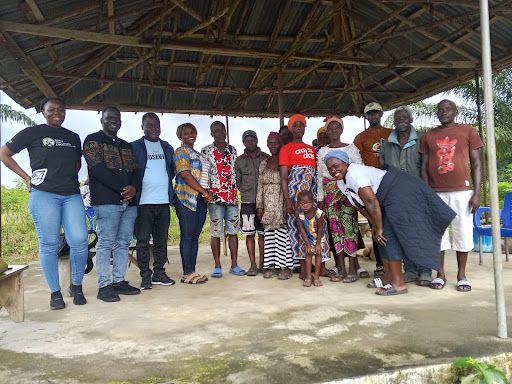
Kpetema Village, located in Sierra Leone’s Eastern Province, is among several communities that have established functional Land Committees under the new Customary Land Rights Act. These committees were formed to promote transparency, fair access, and community participation in land governance.

About the Customary Land Rights Act: In 2022, the Land Acts (the National Land Commission Act and the Customary Land Rights Act) were passed by the national government in Sierra Leone, seeking to guarantee protection of customary land rights, the elimination of discrimination under customary law, and the management and administration of land subject to customary law, and other related matters.
Please refer to pages 23-24
A recent dispute has tested the committee’s resolve and the principles of the new law. The case involved the town chief and the widow of his late brother. According to community members, the chief had insisted that the widow could only regain access to her deceased husband’s farmland if she agreed to marry him. Historically, such coercive practices were common and often went unchallenged, leaving women without recourse to justice or livelihood.
Empowered to assert their land rights
Empowered by radio programmes, public sensitization, and training facilitated by TrustAfrica under the RECLAIM Sustainability! programme, in collaboration with Women in the Media Sierra Leone (WIMSAL), the widow refused the marriage demand. She cited the Customary Land Rights Act, which clearly upholds a woman’s right to her husband’s property and prohibits discrimination in land inheritance and use.
The Kpetema Village Land Committee, comprising six men and four women, convened to deliberate on the issue. After reviewing testimonies and referencing the provisions of the law, the committee unanimously ruled that the widow should reclaim her farmland without any preconditions.
The decision was accepted peacefully, and the widow has since resumed farming. Her courage, supported by a responsive governance structure, became a turning point for women’s confidence in claiming their rights.

The decision was accepted peacefully, and the widow has since resumed farming. Her courage, supported by a responsive governance structure, became a turning point for women’s confidence in claiming their rights.
Campaigning for women’s rights to own land in Sierra Leone
Under the RECLAIM Sustainability! programme, TrustAfrica has campaigned to strengthen women’s rights to own land in (cocoa) communities in Sierra Leone. In 2023, their community awareness campaigns reached 291 community members from seven districts.

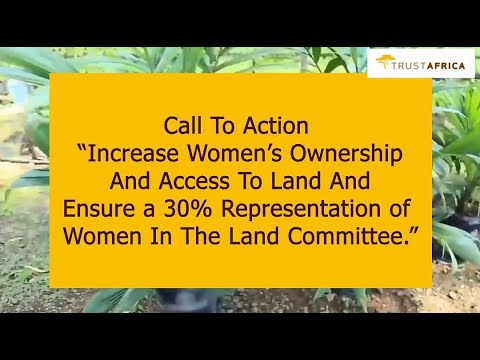
This sensitization placed particular emphasis on the provisions for women in the Land Acts, and also raised awareness on the Forestry Policy and the Gender Empowerment law. In addition to direct engagement with the (cocoa) farmer communities, in 2023 TrustAfrica worked with women champions, civil society organizations (CSOs) and local media to produce a video with a clear call to action: Increase women’s ownership and access to land, and ensure 30% representation of women in the land committee.
This was followed up through community and radio discussions to discuss and sensitize on how these issues affect women farmers. Working with local media has been a powerful means to expose land rights’ violations, and particularly instrumental for women to reclaim their heritage and to successfully challenge the male-centred land governance.


TrustAfrica has been working with civil society organizations, women champions and farmer organizations in the cocoa and palm oil supply chains to advocate for inclusive dialogue, and to amplify their voices, under the RECLAIM Sustainability! programme.
Rachel Gyabaah, Programme Officer at TrustAfrica
The Kpetema Land Committee’s contributions to women’s rights
Since its establishment, the Kpetema Land Committee has recorded additional achievements. No land has been sold in the village since it began operations, a marked shift from previous years of unregulated land transfers. Instead, two plots have been leased through transparent family consultations where women’s participation is mandatory. The committee has also allocated 10 acres of land exclusively for women’s farming activities, granted outright rather than leased. While formal documentation is pending, this move has already boosted food production and women’s economic independence.
Regular community meetings are now held to explain land laws, resolve emerging conflicts, and promote peaceful coexistence. Even the late husband’s brother, Mr. Alpha, who initially supported the chief’s claim, now assists the widow without attaching marriage as a condition; a quiet yet significant cultural shift toward fairness and respect.
TrustAfrica campaigns reached 291 community members from seven districts in 2023
In 2023 TrustAfrica made a call to action to ensure 30% representation of women in the land committee
The Kpetema Land Committee allocated 10 acres of land exclusively for women’s farming activities
The importance of knowledge, law and inclusive governance
The Kpetema case demonstrates that knowledge, law, and inclusive governance can transform entrenched cultural norms. Access to legal education through WIMSAL’s radio programmes empowered women and built trust in local land institutions. Additionally, assisting communities with the formation of the land committees and ensuring the 30% women representation ensures inclusivity in decision making. The Land Committee’s gender-balanced composition and transparent processes proved effective in preventing exploitation and promoting equity. Importantly, it showed that community-led enforcement of national laws can strengthen justice at the grassroots level without external enforcement.
However, the experience also highlights areas for growth: formalizing documentation to secure women’s titles, sustaining committee funding, and extending legal literacy to neighboring communities. Embedding land rights education into local development programmes could further consolidate these gains.
Building on this progress, Kpetema’s approach offers a model for replication across Sierra Leone and beyond. The next step involves formal land registration for women (cocoa) farmers and expanding committee training to reinforce legal literacy and mediation skills. If able to secure the necessary resources, TrustAfrica and WIMSAL aim to scale this model to other districts, with the aim of ensuring that women’s rights are embedded in every layer of customary governance.
By linking community land committees to district and national land institutions, this initiative could shape a sustainable, gender-inclusive land governance framework, transforming land from a source of conflict into a foundation for empowerment and equitable development.


 Built with Shorthand