
RECLAIM Sustainability!
CASE STUDY
Environment, Economics, Inclusivity
A Look at Tangible Impacts in Bangladesh's Textile Industry
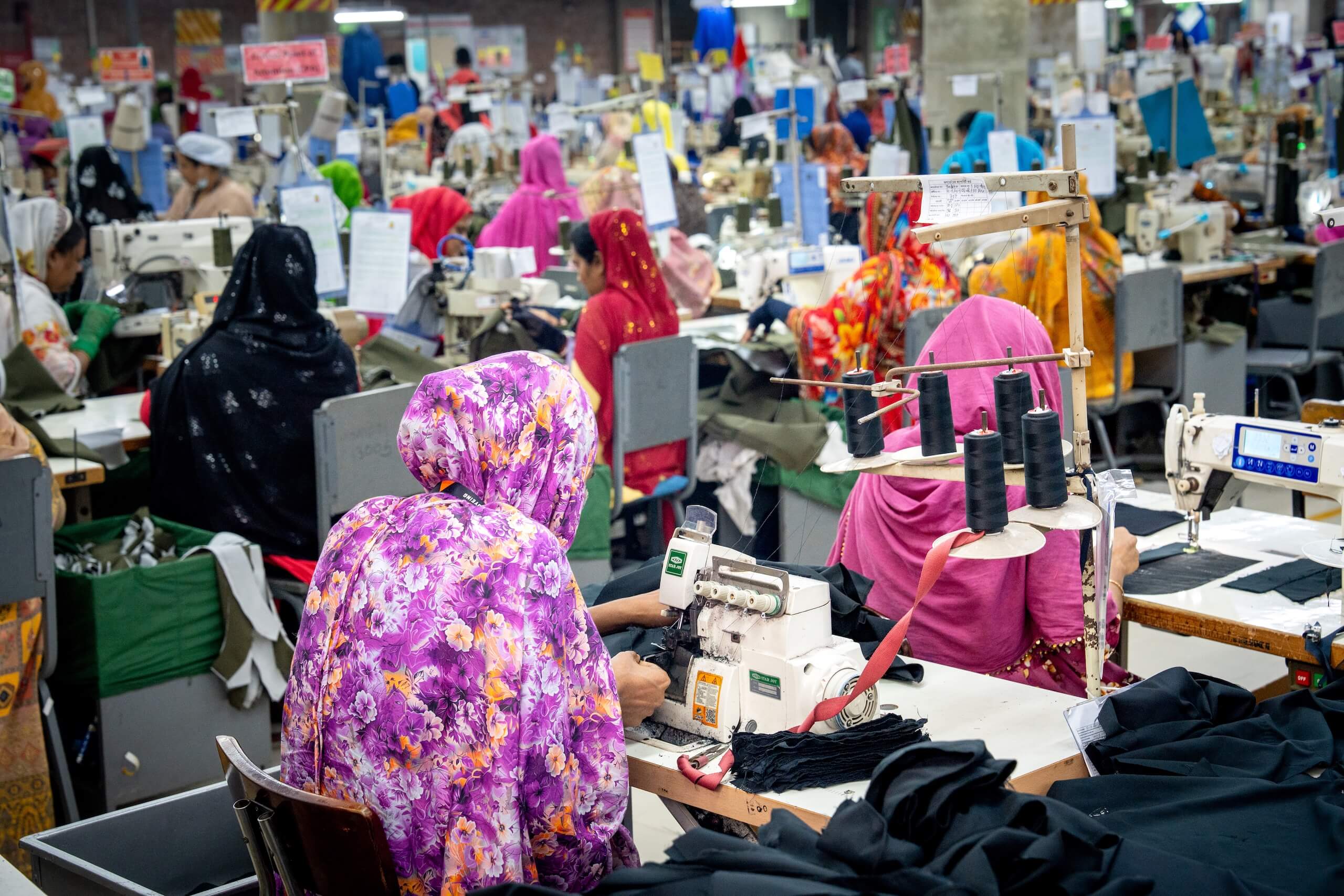

RECLAIM Sustainability!
CASE STUDY
Environment, Economics, Inclusivity
A Look at Tangible Impacts in Bangladesh's Textile Industry


REGION
Asia, Bangladesh
CONSORTIUM LEAD
Solidaridad
PARTNERS
Bangladesh Garment Manufacturers and Exporters Association (BGMEA)
Bangladesh Knitwear Manufacturers and Exporters Association (BKMEA)
Relevant government bodies
Trade unions
REGION
Asia, Bangladesh
CONSORTIUM LEAD
Solidaridad
PARTNERS
Bangladesh Garment Manufacturers and Exporters Association (BGMEA)
Bangladesh Knitwear Manufacturers and Exporters Association (BKMEA)
Relevant government bodies
Trade unions
This RECLAIM Sustainability! initiative is transforming Bangladesh's textile sector by tackling pollution, water, chemicals and energy inefficiency, and fostering worker well-being. Through policy dialogue and capacity building, the project promotes green practices and fosters gender inclusivity. It has also been working pro-actively towards preparing the country’s readiness to meet human rights and environmental due diligence (HREDD) expectations from European market actors.


Environmental transformation vs. economic viability
Bangladesh’s immense textile and apparel sector is a major engine of its economy, making the country the world’s third-largest fashion exporter (after EU and China), and the second biggest textiles production country. With ongoing European Union (EU) policy regulations, such as the Human Rights and Environmental Due Diligence (HREDD), the industry must pivot from voluntary green efforts to institutionalized, financially attractive sustainability. Solidaridad’s textiles project under RECLAIM Sustainability! has been spearheading this transformation, proving that environmental compliance and economic viability are two sides of the same cloth for sustaining the business viability of the fashion industry.
Historically, the sector’s large-scale consumption of water and chemicals has created an unsustainable environmental footprint. This project began by convening high-level, multi-stakeholder dialogues involving government, industry associations like Bangladesh Garment Manufacturers and Exporters Association (BGMEA), Bangladesh Knitwear Manufacturers and Exporters Association (BKMEA), and civil society. These discussions established a crucial policy foundation: adopting cleaner technologies and increasing resource efficiency aren’t just compliance costs—they are a competitive advantage.

Cleaner Production and Chemical Management
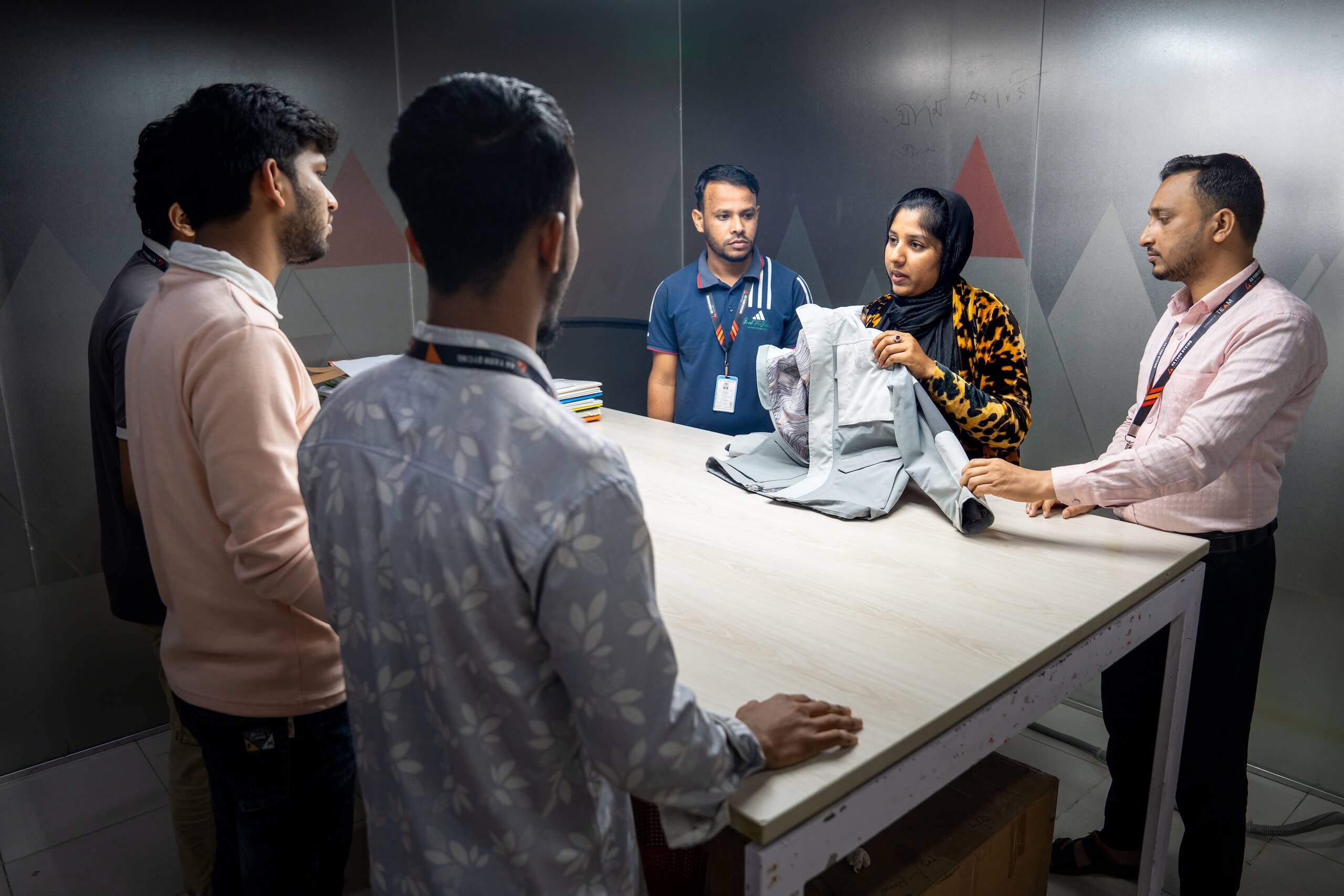
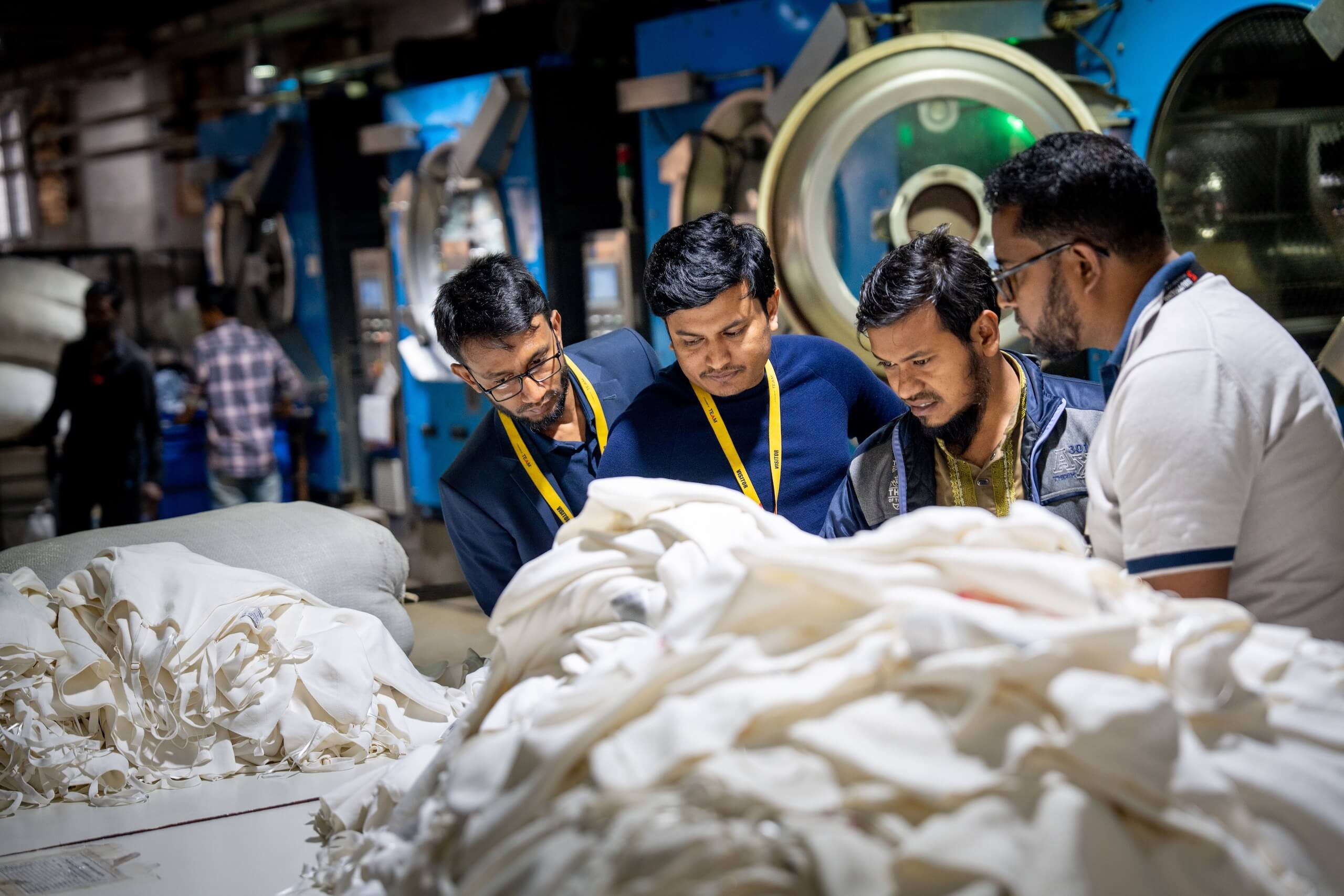
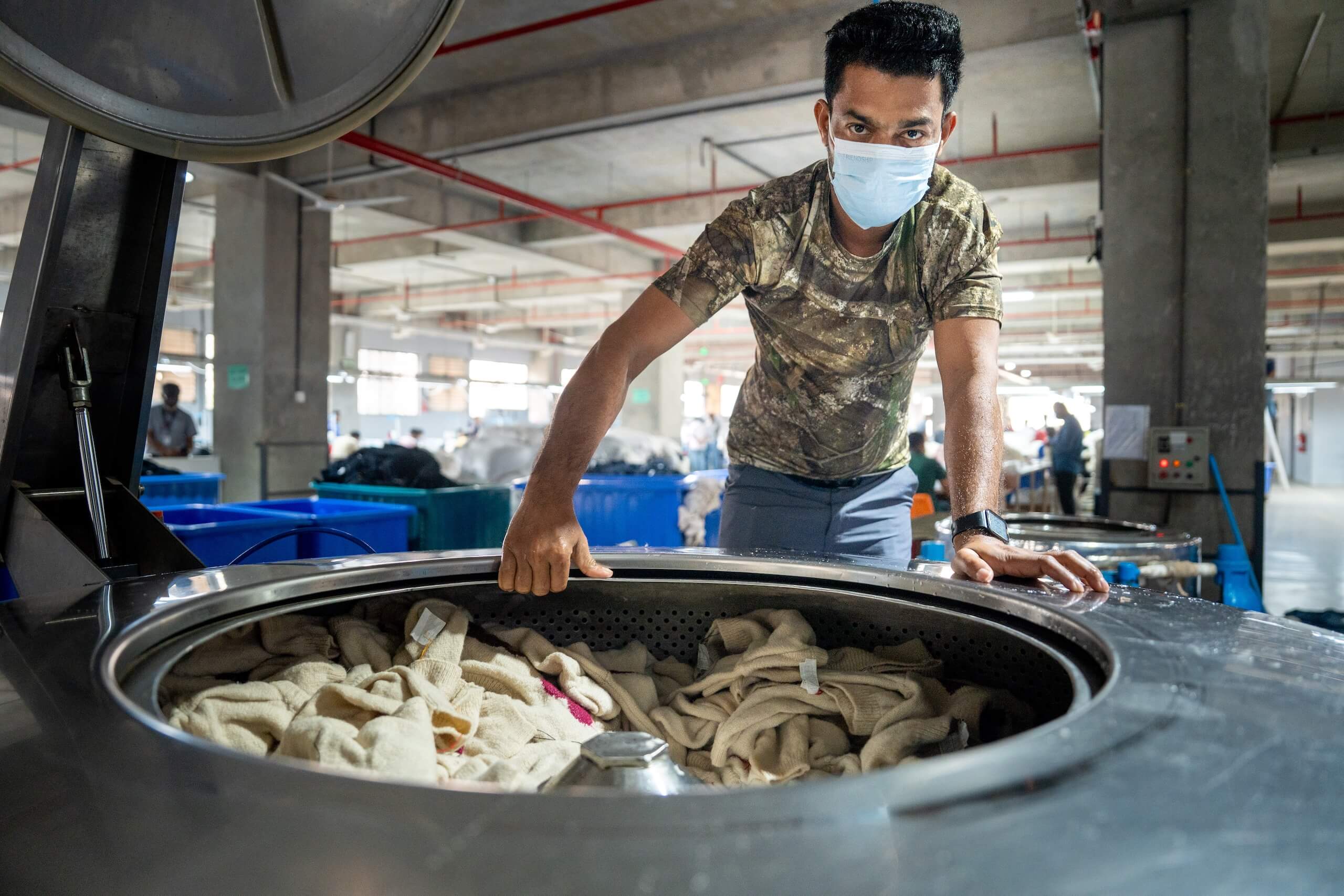
The chemical management training modules developed by the project are changing the use of biodegradable and environmentally friendly chemicals for safer and more sustainable and circular production practices. Four leading companies—SQ, Gramtech, Aboni, and 4A Yarn Dyeing—adopted advanced chemical management systems. This resulted in a significant reduction in harmful chemical use, directly addressing both environmental pollution and worker safety. The financial incentive is clear: Bangladesh spends billions on chemical imports, and the project’s approach tackles the inefficiency that wastes a large portion of these costly resources during dyeing. This success spurred BGMEA to draft a new Sustainability Policy for the entire industry, formally institutionalizing the need for change.
The changes we’re driving in our operations are designed to create value for both the environment and the business. Sustainability isn’t optional; it’s a responsibility. We must act now to ensure our industry operates with integrity, accountability, and a long-term vision.

The changes we’re driving in our operations are designed to create value for both the environment and the business. Sustainability isn’t optional; it’s a responsibility. We must act now to ensure our industry operates with integrity, accountability, and a long-term vision.
Energy Efficiency and Carbon Neutrality
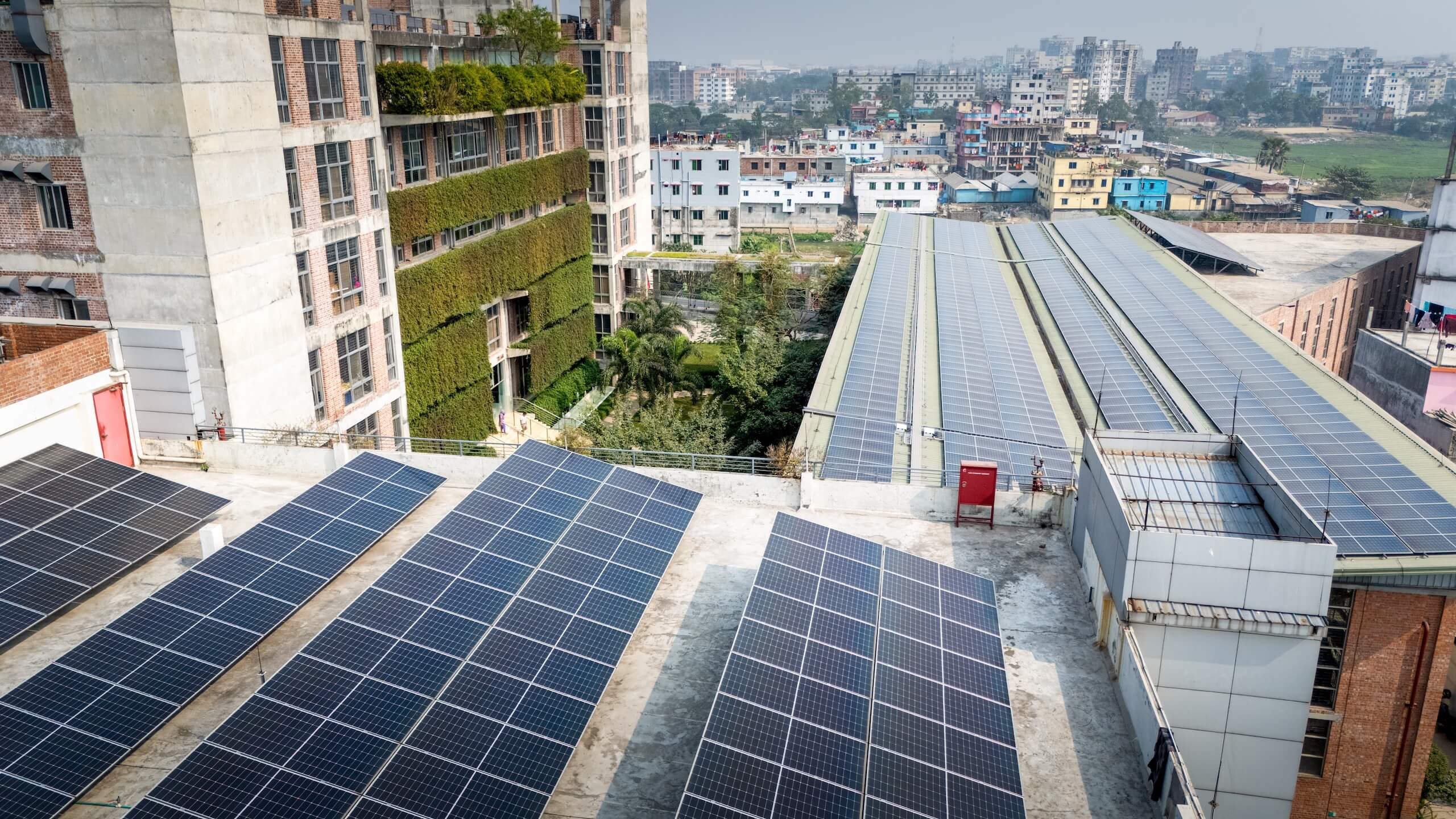
The energy policy paper and round table discussion influenced industry stakeholders to adopt energy efficient industrial production to effectively reduce carbon emissions. In response to global pressure for decarbonization, ten major textile factories adopted new clean energy policies and targets. As energy costs can account for about 20% of total production expenses, investing in energy-efficient technologies and promoting cleaner options like co-generation directly lowers operational costs while aligning the industry with international climate goals and preparing for future carbon taxes.

Weaving Inclusivity: The Social Dimension of Due Diligence
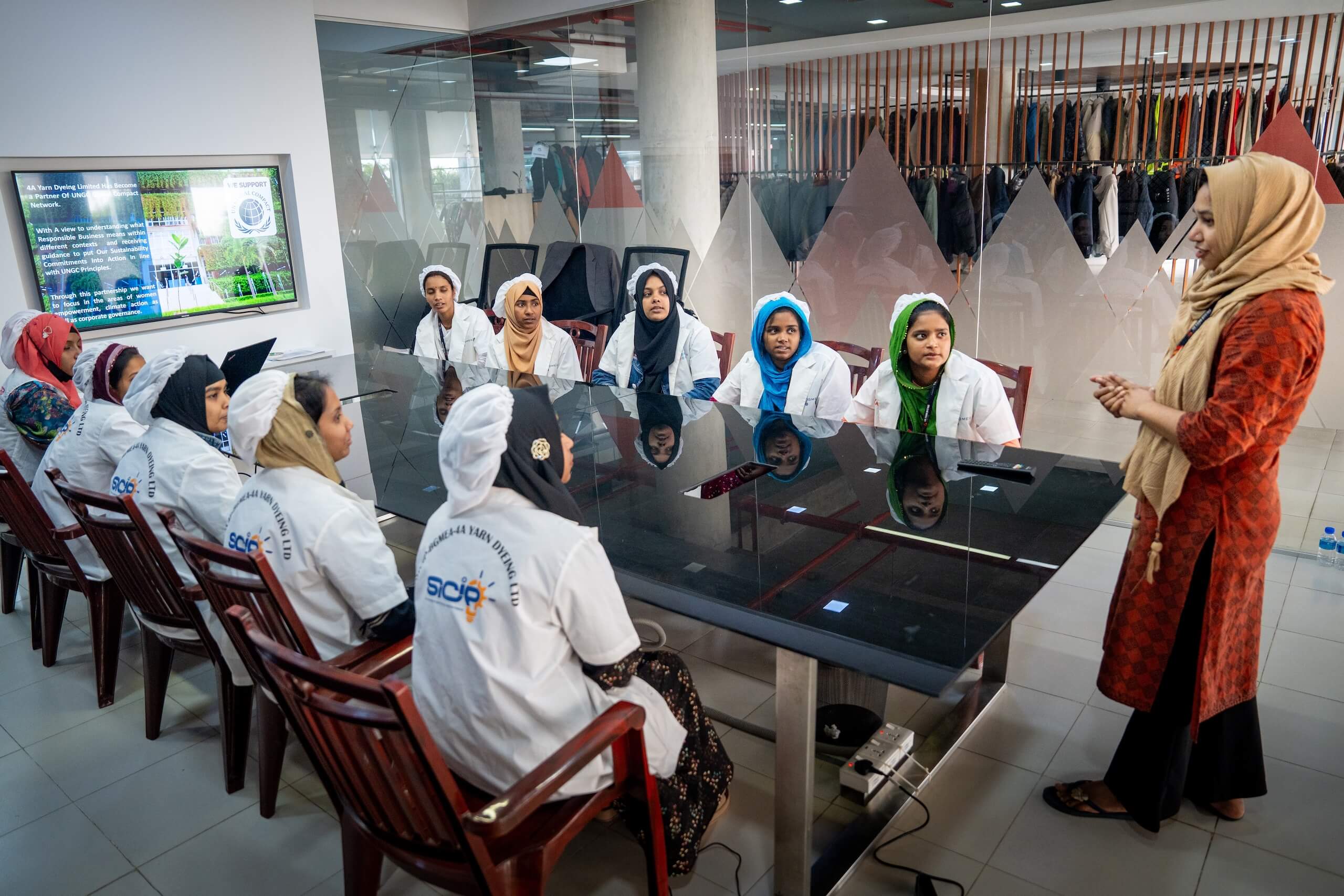
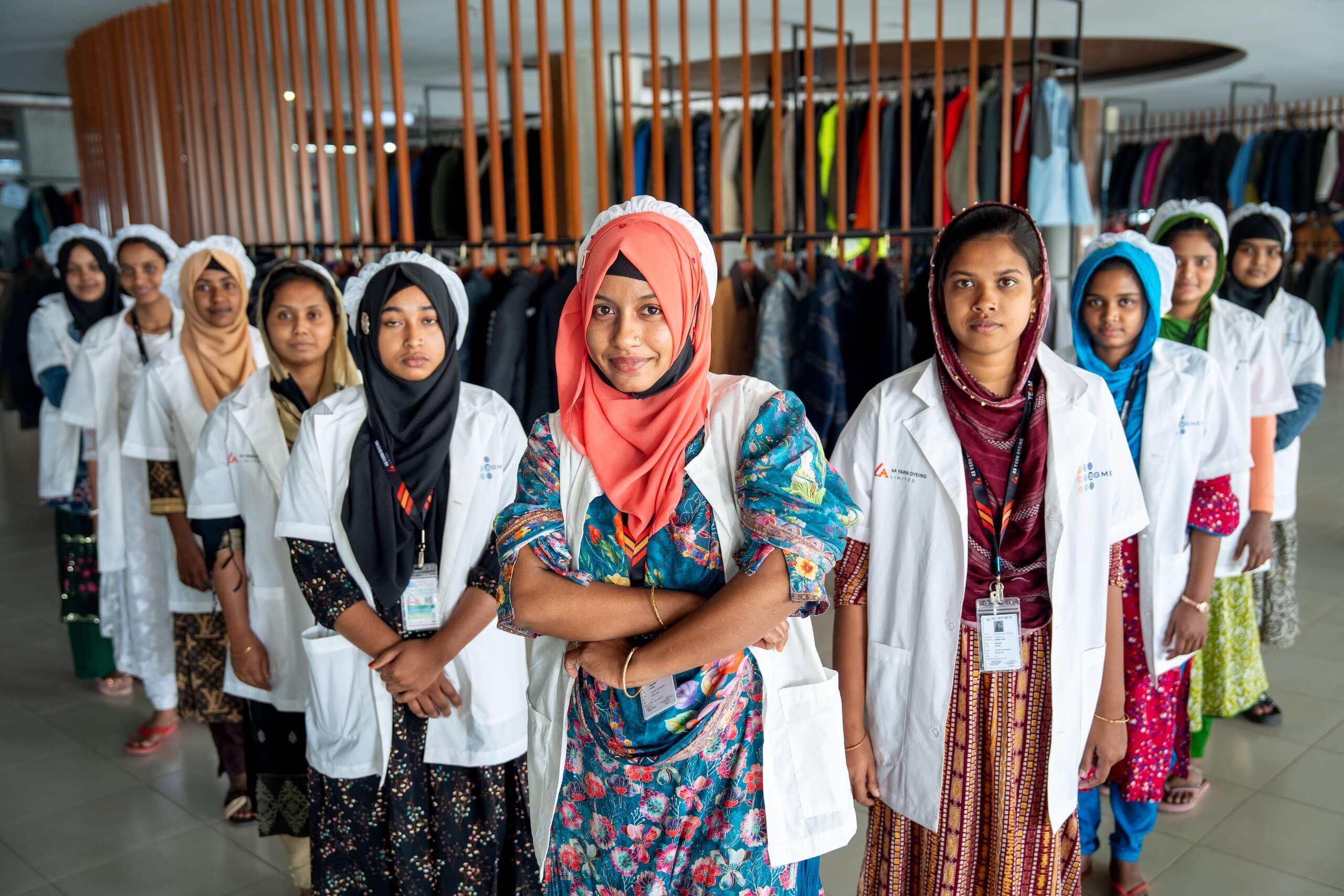
This project has been championing gender and social inclusion in textiles through the development and implementation of the Gender Inclusivity Assessment Tool (GIAT) that is especially designed to identify and address the deep-rooted social norms limiting women’s leadership in the textile sector. Companies like 4A Yarn Dyeing, Desh Garments and InterFAB established operational standards at the factories involved in the project to comply with the international brands’ requirements on workplace inclusivity.
The GIAT evaluates and enhances factory policies on technical skills, compliance, and female leadership. Recognizing that women make up 60% of the 4-million-strong workforce, the programme trained 2958 workers (70% female) on productivity and leadership. This focus on empowering women into supervisory roles is a powerful step towards a more equitable, productive, and resilient workforce, ensuring that sustainability efforts positively impact workers' livelihoods.


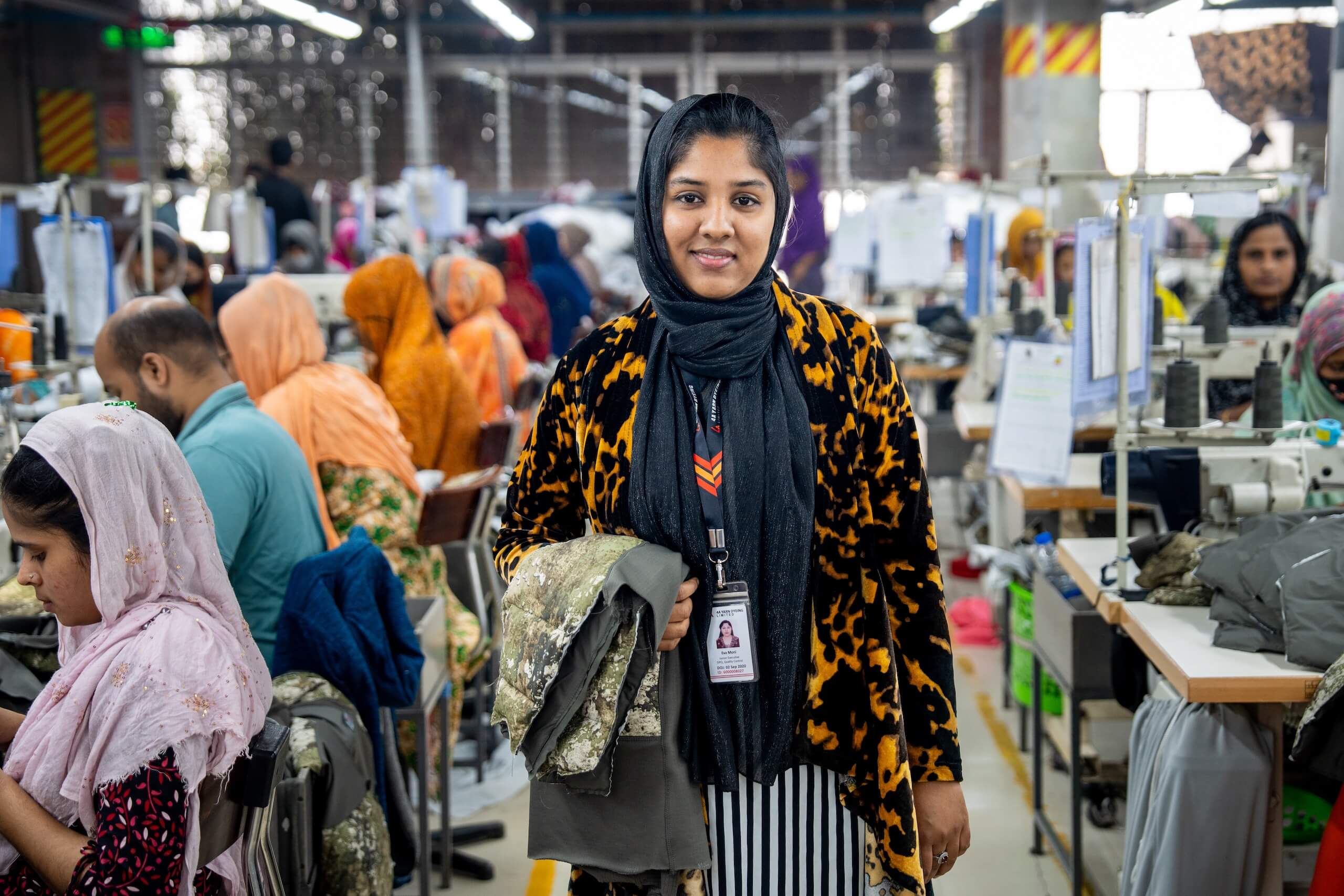
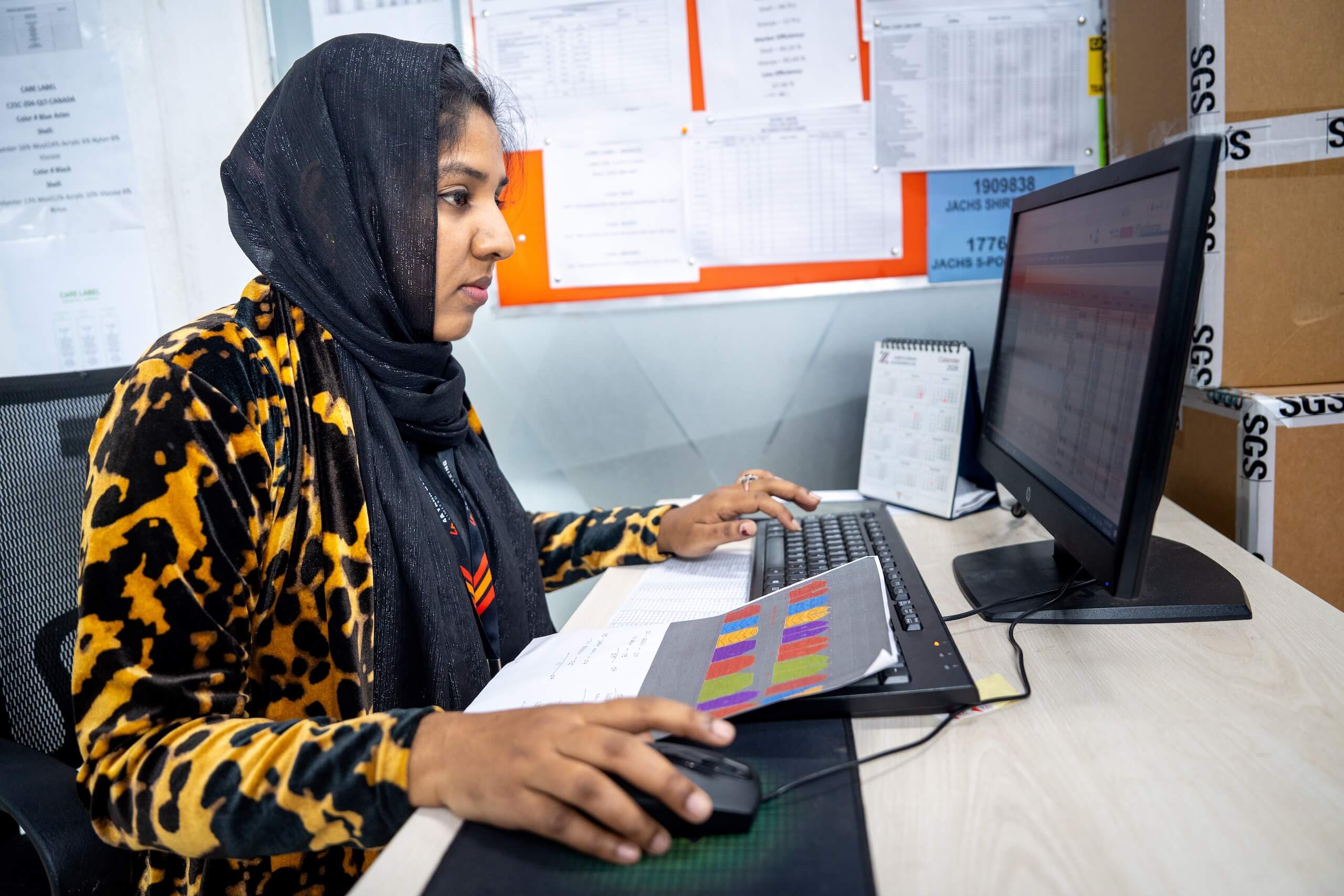
I began my career at 4A Yarn Dyeing Ltd., a sister concern of TEAM Group in September 2020, as a General Quality Inspector on the factory floor, never imagining that I could one day move into a management role. With encouragement from my supervisors, along with training opportunities and increased responsibility, I was able to grow both my skills and confidence. The company’s culture of inclusivity and commitment to giving women the same opportunities as men played a key role in my career. As a result, I was promoted to Junior Executive.
Today, I contribute not only to quality improvement but also to mentoring other women on the floor. I feel confident in my work and proud to show other women that they, too, have a future here if they continue to learn and take on greater responsibilities.
Eva Moni, Junior Executive at 4A Yarn Dyeing Ltd

Meanwhile, as automation is reshaping the production lines, it’s essential for Bangladesh's garment sector competitiveness. However, it is also displacing workers, with a 30.58% workforce reduction. This necessitates a "just transition" roadmap to protect vulnerable groups (women, unskilled labourers). By partnering with civil society organizations, trade unions, and research institutes, this project has been mobilizing the political will of the government and other stakeholders to ensure that the progress doesn’t leave behind the vulnerable workers.
major factories adopted a new clean energy target, setting a national precedent for green transformation.
key factories adopted cleaner processing methods through efficient chemical management (in addition to above).
Achieved an average
15-20%
reduction in chemical use, improving effluent quality by 30% and cutting worker exposure risks.
textile factories (among the 10 specified above) implemented the Gender Inclusivity Assessment Tool and gender-sensitive training modules.

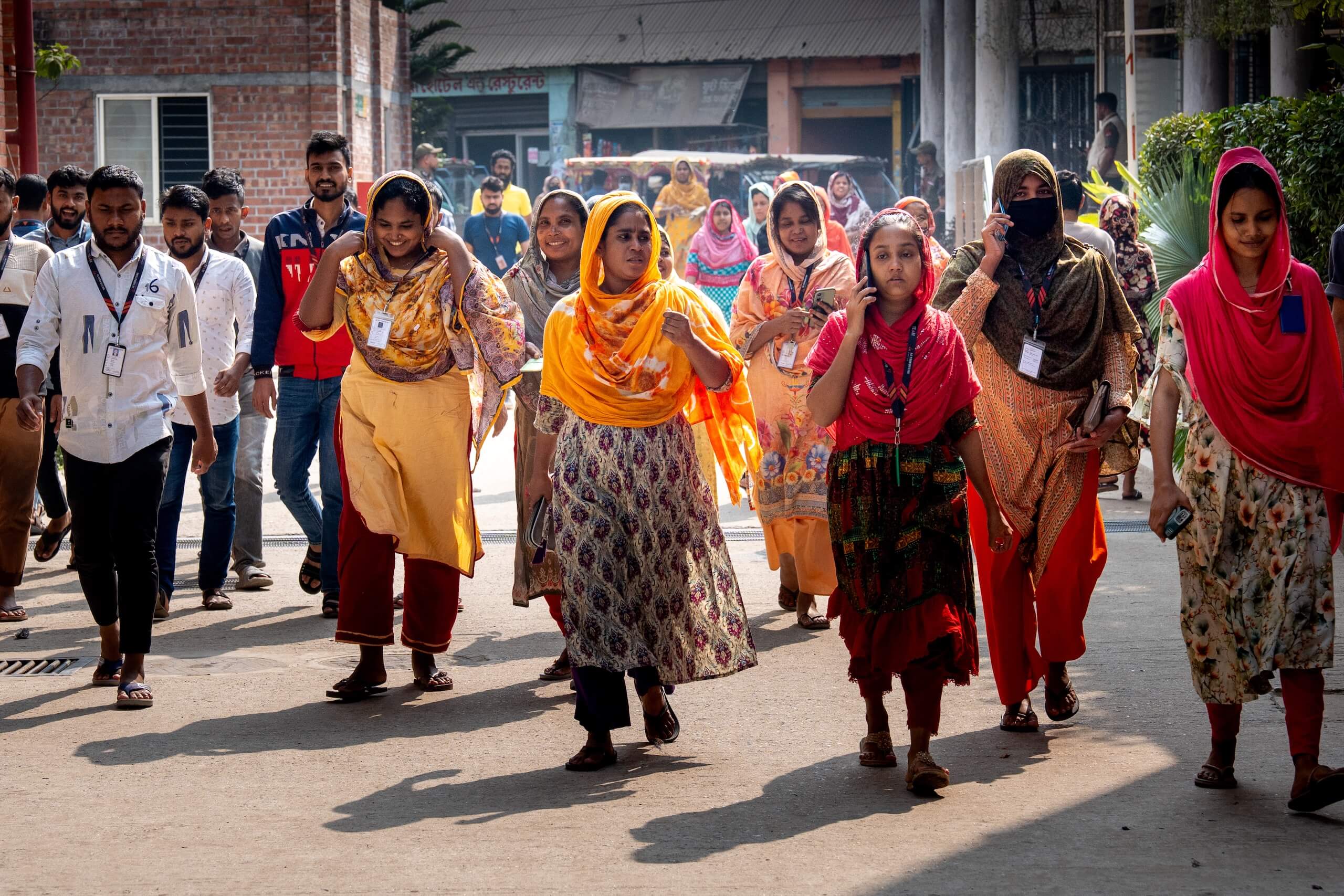
(70% women) participated in training on productivity, compliance, and leadership, improving women’s participation in supervisory roles (through promotion) by 25%.
major industry associations (BGMEA & BKMEA) issued formal guidance notes to members encouraging preparation for EU due diligence regulations.
BGMEA
formally committed to embedding chemical and energy efficiency standards into its policy framework.


Results & Insights
This project demonstrated impact and scalability by proving that sustainability is a financially attractive prerequisite for market access and alignment with emergent policy requirements, such as the CSDDD.
Key Results & Scalability:
- It secured top-down institutional commitment by integrating external mandates into BGMEA/BKMEA policy, which is the engine for industry-wide change.
- Factory-level changes in chemical and energy efficiency (e.g. co-generation) promoted circular production practices that reduced both pollution and operational costs (energy is ∼20% of expenses).
- The Gender Inclusivity Assessment Tool (GIAT) fostered social due diligence, empowering women into supervisory roles to create a more resilient workforce.

The industry's future viability rests on successfully weaving these challenges— including green transition and inclusive work environment into its business model. The key possibility for scale lies in ensuring that institutions like BGMEA and BKMEA embrace the holistic concept of due diligence, looking at social, environmental and commercial factors at the same time; in an effort to secure Bangladesh’s position as a preferred choice for sourcing of fashion products.
The unfinished opportunity for potential impact is connecting Ready Made Garment (RMG) factories, especially Small and Medium-sized Enterprises, with 'green finance' to accelerate energy-efficient technology adoption at scale. The next step in creating further impact would be the adoption of HREDD regulation frameworks at the national level as well, facilitating a legally binding, cohesive compliance structure for the entire sector's green and social transition.
LEARN MORE
- Solidaridad's EU CSDDD Workshop Attracts Attention in Apparel Sector
- How Bangladesh’s Apparel Industry Can Adapt to EU Sustainability Rules
- Chemical Management Use Must Improve for Workers’ Health, Safety, Pollution Control
- Adopting Energy-efficient Machines Key to Cutting Carbon Emissions
- Greening the Textile Sector in Bangladesh
- RMG automation leads to 30.58% decline in workforce: Study


 Built with Shorthand