
BUILDING FAIRER SUPPLY CHAINS FOR MILLIONS OF FARMERS
GLOBAL ANNUAL REPORT 2025
975,000
farmers have increased income from their farm
2,838
tCO2e per year has been avoided, restored or removed.
1.3 million
farmers have improved their yields as a result of working with Solidaridad
226,000
workers and miners have improved their working conditions
Solidaridad's Managing Board presents the highlights over 2025
WORLDWIDE IMPACT
ASIA
Solidaridad, in partnership with Regenagri, introduced the world’s first insetting carbon standard. The efforts paid off when, for the first time, three tea plantation companies in Sri Lanka (Hayleys Plantations, Aitken Spence and Lumbini Tea Gardens) adopted the Regenagri Carbon Insetting Standard to tackle their Scope 3 emissions. The Memorandum of Understanding was signed in 2025 with Solidaridad as the sustainability partner for these companies.
SOUTHERN AFRICA
In Southern Africa, we placed 162,861 hectares under sustainable management. Overall, 205,299 regional farmers accessed improved services, cementing our legacy of scalable agricultural transformation.
EAST AND CENTRAL AFRICA
Across East Africa, small-scale producers are driving the transition toward more resilient and sustainable agriculture, industrial and mining supply chains. By adopting sustainable practices, they are enhancing productivity, strengthening incomes and deepening their commitment to environmental stewardship. In 2025, Solidaridad — alongside strategic collaborators — advanced these efforts through targeted technical expertise, improved service delivery systems, stronger market linkages and supportive policy frameworks. Through our producer-led, partnership-driven approach, we demonstrated how agency, shared vision and coordinated support can transform supply chains. The impact is clear: economic gains, long-term resilience for small-scale producers and meaningful contributions to regional sustainability and development goals.
WEST AFRICA
In 2025, Solidaridad West Africa deepened its work in sustainable agricultural practices and drove systemic policy reforms. We championed climate-smart agriculture and robust financial inclusion, helping over 76,732 cocoa, oil palm, and cashew farmers to boost their yields and incomes amidst global and regional economic shocks.
EUROPE
Solidaridad Europe engages donors, companies, knowledge institutes and civil society organizations to make global supply chains more sustainable. With offices based in the Netherlands and Germany, we work with various European partners to explore opportunities to create a sustainable and inclusive impact. Despite growing global rifts and challenges, we continue our work and collaborations with determination. This includes calling on various stakeholders to ramp up their efforts and take up their role in achieving a more sustainable and inclusive society. Our diverse and committed staff is key to realizing the vision and strategy of Solidaridad.
LATIN AMERICA
In 2025, we exceeded our targets for technical assistance and financial inclusion, reaching 62,380 producers and securing credit lines for 3,098 others. By delivering advanced EUDR compliance tools and de-risking corporate sourcing schemes, we transformed complex challenges into profitable, scalable market solutions. Furthermore, through pioneering carbon-backed agroforestry finance and small-scale mining formalization, we are scaling models across the continent that ensure economic viability goes hand in hand with environmental integrity.
STORIES OF CHANGE
Our work is best illustrated by the stories from farmers themselves. Read the practical examples of how we have improved global supply chains for small-scale farmers and workers in 2025.
Reclaiming sustainability
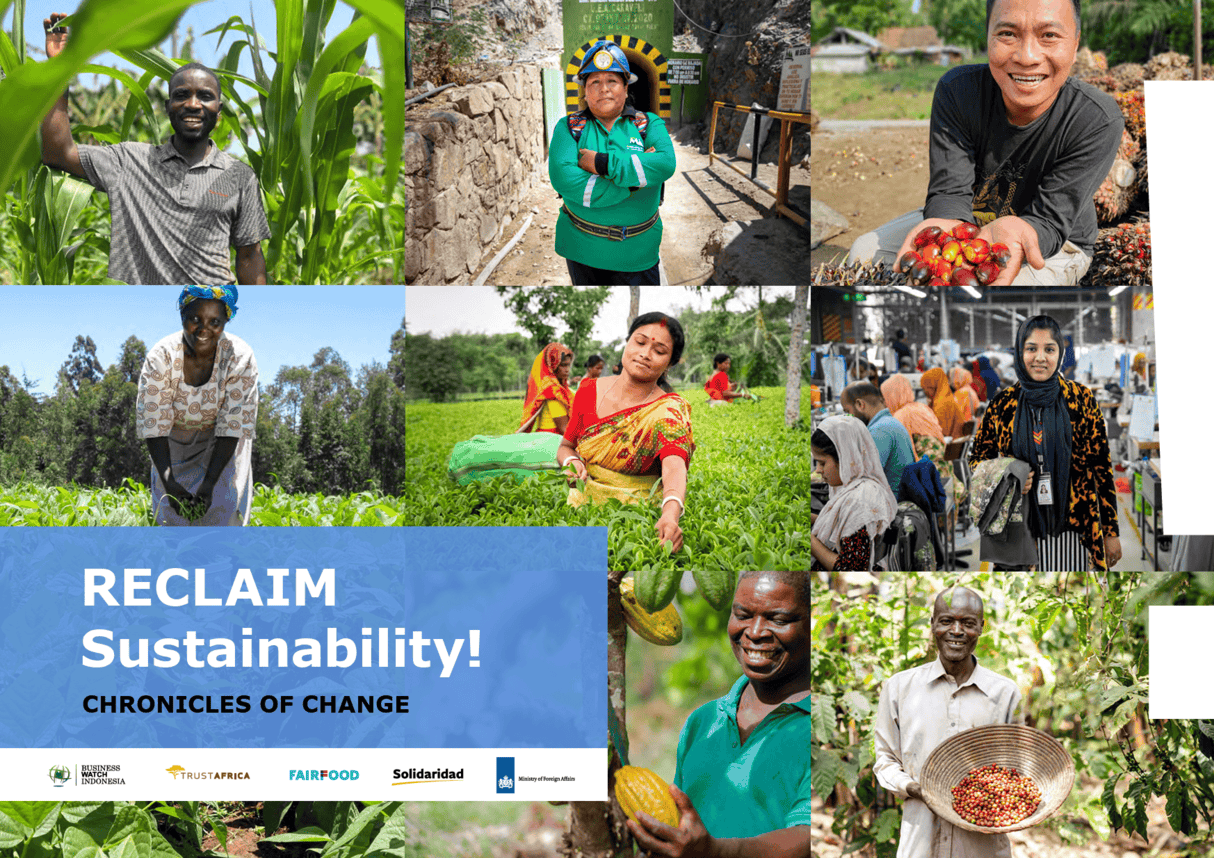
The 5-year RECLAIM Sustainability! programme, implemented by Solidaridad, TrustAfrica, Business Watch Indonesia and Fairfood, in strategic partnership with the Dutch Ministry of Foreign Affairs has re-balanced power and transformated supply chains to benefit smallholder farmers, workers, and miners. It has contributed to a responsible private sector, a supportive public sector, and a vibrant and strong civil society.
READ MORE
Soy gains in Bangladesh
For years, farmers in coastal Bangladesh struggled against declining soil fertility and unpredictable climate conditions. Today, with access to improved soybean seeds and sustainable farming practices, farmers like Gias and Asma are transforming both their land and their livelihoods.
READ MORE
A granddaughter's will to effect change
By adopting organic practices and sharing her knowledge, Jemimah Nelima Chemiat has helped her grandfather significantly increase his yields and restore the health of his land. Her guidance has inspired neighbouring farmers to improve their methods and encouraged women and youth to take a more active role in the coffee value chain.
READ MORE
Connecting knowledge to purpose
Across South Africa, farms are becoming learning spaces. Through Solidaridad’s SEF project, more than 1,700 unemployed young people are engaged in work-based learning across agricultural value chains. On active farms and food gardens, participants gain hands-on experience in soil preparation, crop maintenance, pest and disease management, irrigation, record-keeping and enterprise development.
READ MORE
A vision for rural women in Colombia
María Isabel turned a childhood legacy into a mission. When climate change threatened her cocoa farm, the Asómbrate programme offered the solution: agroforestry. Her success in achieving climate resilience and long-term productivity shows how empowerment, tradition, and sustainability can power rural development.
READ MORE
A farmers' fight against food waste
The Farmer’s Field and Business School in Nigeria has been providing farmers with crucial training in post-harvest loss management for fruits and vegetables. Participants learn practical methods of tomato preservation, helping them to reduce losses, sustain incomes and improve food security, especially during the off-season. For years, Rahinatu Lawal watched as heaps of fresh tomatoes harvested in her community went to waste due to inadequate storage facilities and a lack of processing options. Determined to tackle the problem, she began processing and preserving unsold tomatoes instead of letting them rot.
READ MORE.
A RENEWED FOCUS ON SMALL-SCALE FARMERS
This year also marked the end of our strategic cycle for 2020-2025. We have successfully developed and finalized the new Multi-Annual Strategic Plan (MASP) for 2026–2030, reconfirming the organization's focus on resilient farmers in sustainable supply chains.
Building on the lessons learned and impact achieved in the previous strategic cycle, this new strategy equips and motivates us to improve the lives of farmers and workers even further.
we maintained a strong, field-oriented workforce of 1,665 staff members across the globe, demonstrating resilience despite a turbulent funding landscape. We continued modernizing HR Systems and building a strong organizational culture. Globally, 85% of staff reported they would recommend Solidaridad as an employer.
Human Resources
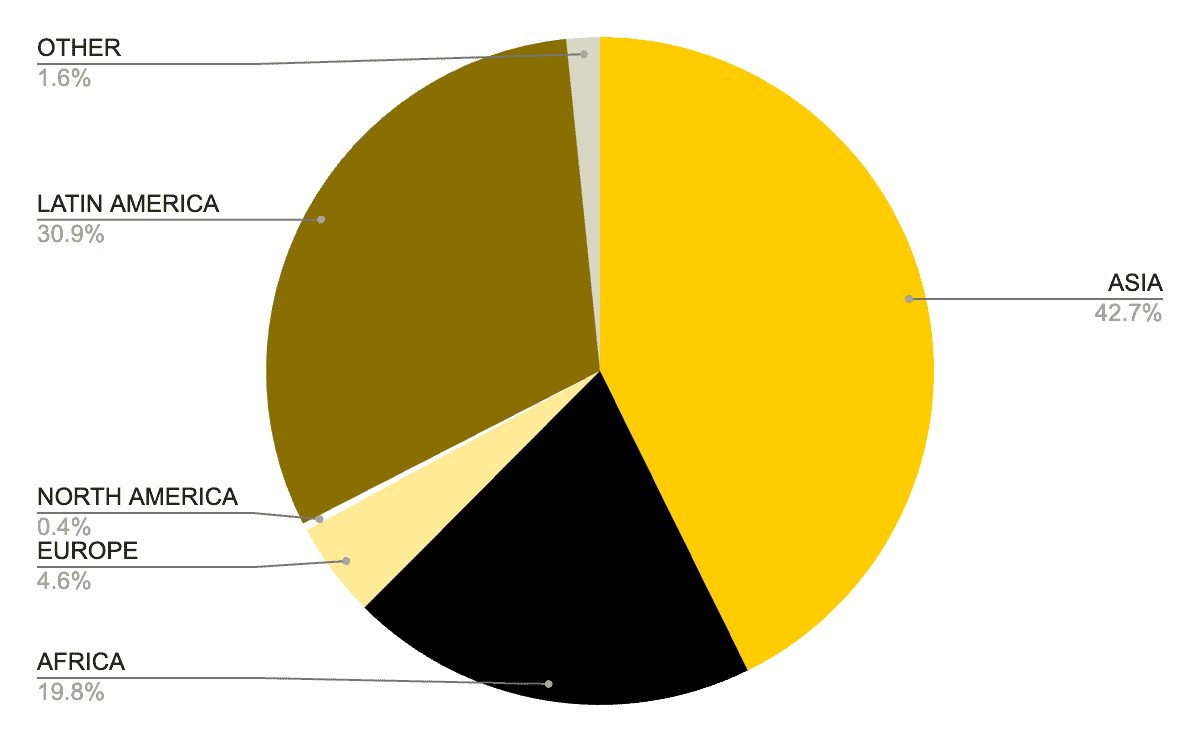
In 2025, we had a global workforce of 1,665 staff members. Asia is the largest region with 711 staff, mainly due to its large-scale on-the-ground interventions. Latin America is the second largest with 515 staff, anchored by Colombia with 242 staff members and Brazil with 83 staff members. In Africa, we employ a total of 329 staff members. We also have 83 staff in Europe and North America.
| Headcount 2025 | Female | Male | Total |
|---|---|---|---|
| Asia | 179 | 532 | 711 |
| East and Central Africa | 48 | 53 | 101 |
| Europe | 53 | 24 | 77 |
| Latin America | 245 | 270 | 515 |
| North America | 4 | 2 | 6 |
| Southern Africa | 29 | 40 | 69 |
| West Africa | 61 | 98 | 159 |
| Other/global | 15 | 12 | 27 |
| Total staff count | 634 | 1,031 | 1,665 |
Globally, our workforce is comprised of 1,031 men and 634 women, with large regional deviations. Europe's workforce is predominantly female (53 women to 24 men). North America and the office of the Executive Director also boast female majorities. The staff of Latin America is relatively equally divided, employing 245 women and 270 men. Regions with remote field operations, such as Asia (532 men, 179 women) and West Africa (98 men, 61 women), have significantly more men employed than women. To counter this, these regions have prioritized inclusive leadership. Asia actively worked to recruit women across all levels, successfully achieving a 25% female participation rate in 2025. West Africa intentionally promoted female staff into higher-responsibility and programme management roles to address its gender gap. East and Central Africa (ECA) implemented mentorship programs that resulted in women assuming new senior and project management positions and a balanced workforce with 48 women and 53 men.
While the overall number of staff grew in 2025 compared to 2024, the changing global funding landscapes required several regions to adapt their workforce sizes and composition and reduce FTEs.
In 2025, we continued modernizing HR Systems and building a strong organizational culture. We condensed our organizational values (solidarity, impact-driven, solution-oriented and integrity) into a simplified list to help staff connect with them more easily. In the Solidaridad Staff survey of 2025, 87% agreed or strongly agreed that their colleagues behaved in line with these values. Furthermore, 85% of staff said they would recommend Solidaridad as an employer. This important internal survey measuring the organizational climate was filled out by 85% of our staff.
In all regions, there was significant attention for employee wellbeing, succession planning and psychological safety. We also scaled up our hybrid global onboarding programme, in which staff can follow training on topics related to strategy, communication, HR, Project Management & Evaluation, Governance, Finance & Fundraising and IT.
See below an overview of our staff and how it is spread across our countries of operations:
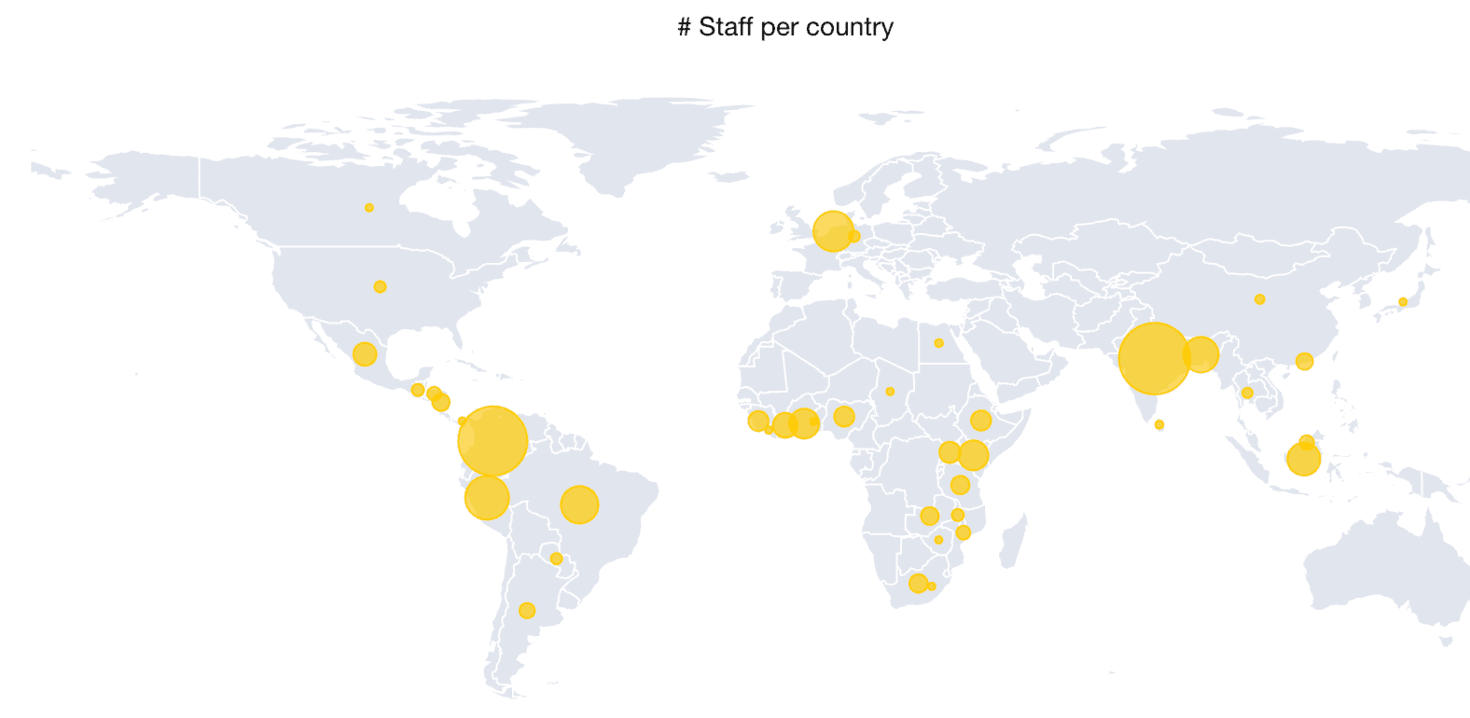
More information about our staff, management and supervision can be found here.
Integrity
Across the Solidaridad network in 2025, safeguarding institutional integrity and fostering a safe, transparent work environment were major priorities. At the core of these efforts are the Solidaridad Code of Conduct and Whistleblower Protocol, which guide the prevention, monitoring and reporting of integrity issues. To ensure these standards were upheld, regions proactively rolled out capacity-building and compliance initiatives. Latin America strengthened its system by implementing a new integrity Action Plan aligned with global standards, and Asia conducted multiple online and country-specific trainings to enhance staff awareness of grievance policies and processes.
Globally, we managed 11 potential integrity cases or grievances in 2025. Southern Africa addressed one formal integrity issue—which was resolved via a formal agreement and subsequently referred to an external body—alongside three minor concerns that were handled internally by designated persons of trust. In Asia, five code of conduct breaches and grievances were reported in 2025. All issues were investigated and, where appropriate, formal warnings or corrective actions followed. Of the two cases in East and Central Africa, one is still under investigation. The other one was found justified and led to the termination of the involved staff members. Latin America resolved two reported issues, fostering trust and confidence among staff and partners. In West Africa, one integrity incident was reported, which led to the resignation of a staff member and a stricter enforcement of the related parties policy. In Europe, no formal integrity breaches were reported in 2025.
Communications
In 2025, Solidaridad's communication efforts across the network evolved significantly, shifting from routine visibility activities toward more impact-oriented storytelling and strategic advocacy. Communications played a pivotal role in claiming thought leadership, driving inclusive policy changes and amplifying the voices of smallholder farmers and workers on the global stage.
Global Strategy and Brand Alignment
Solidaridad successfully consolidated its messaging under a unified "One strategy, one brand" approach. A new Global Communication Strategy was approved and rolled out alongside updated corporate branding guidelines to ensure professional, consistent messaging worldwide. Despite declining trust in social media, Solidaridad's visibility and engagement increased significantly, particularly on LinkedIn, where we surpassed 1.38 million impressions.
Some concrete communication highlights and achievements in 2025 included:
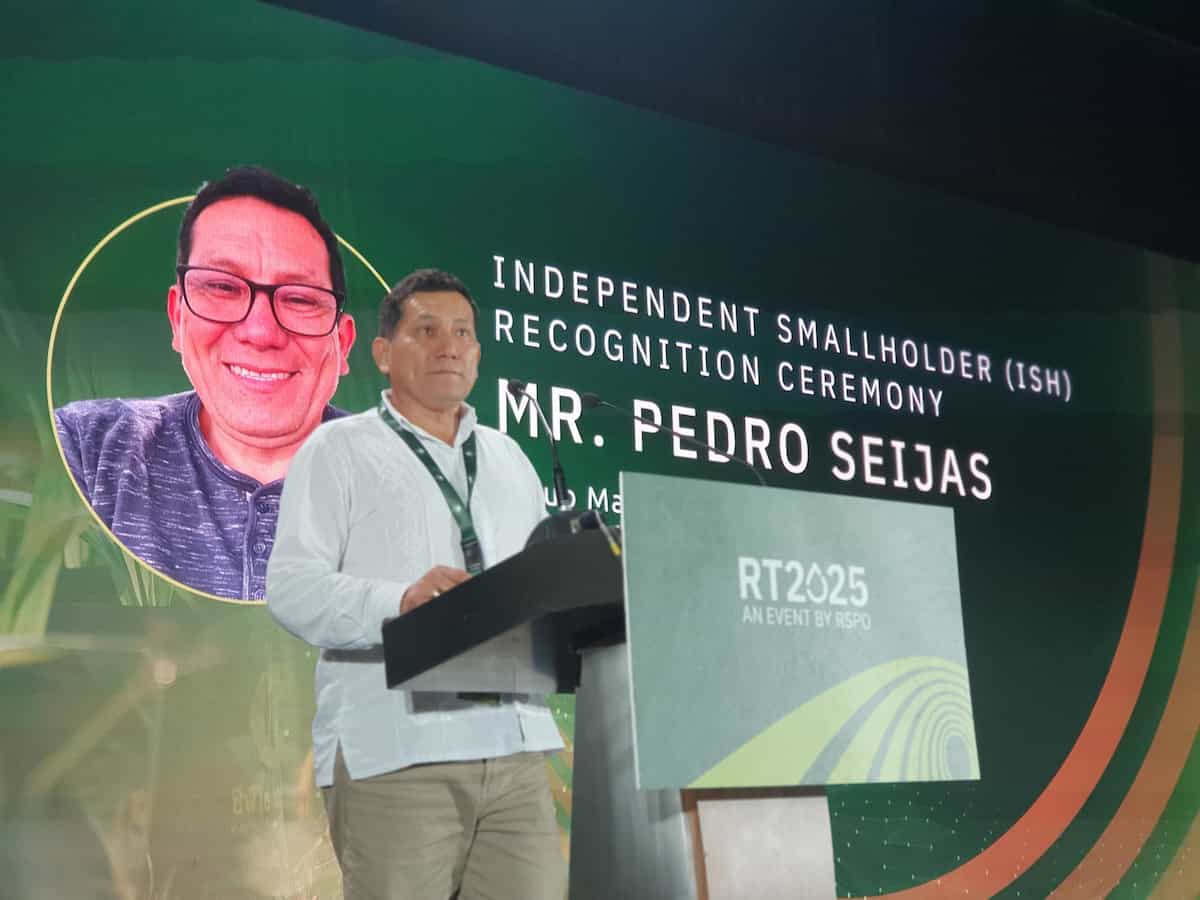
Solidaridad supported smallholder leaders to speak directly to decision-makers. For instance, Pedro Seijas from Peru addressed the global RSPO conference regarding the failure of credit markets and the need to shift from merely implementing sustainability to enabling farmers to make a living from it.
We launched the "Solidaridad for Sustainable Asia" YouTube channel, which amassed over 15,000 subscribers in just six months.
Through articles in the media, we reached a potential audience of 2 billion.
In Uganda, we launched a highly impactful radio and media campaign focused on responsible artisanal mining and child protection. By partnering with local mining associations, the campaign reached an estimated 500,000 people to raise awareness about the dangers of mercury exposure and advocate for keeping children in school.
In Europe, we drove powerful public campaigns that successfully pressured major Dutch supermarkets—such as Albert Heijn and PLUS—to publicly pledge living income strategies for cocoa farmers.
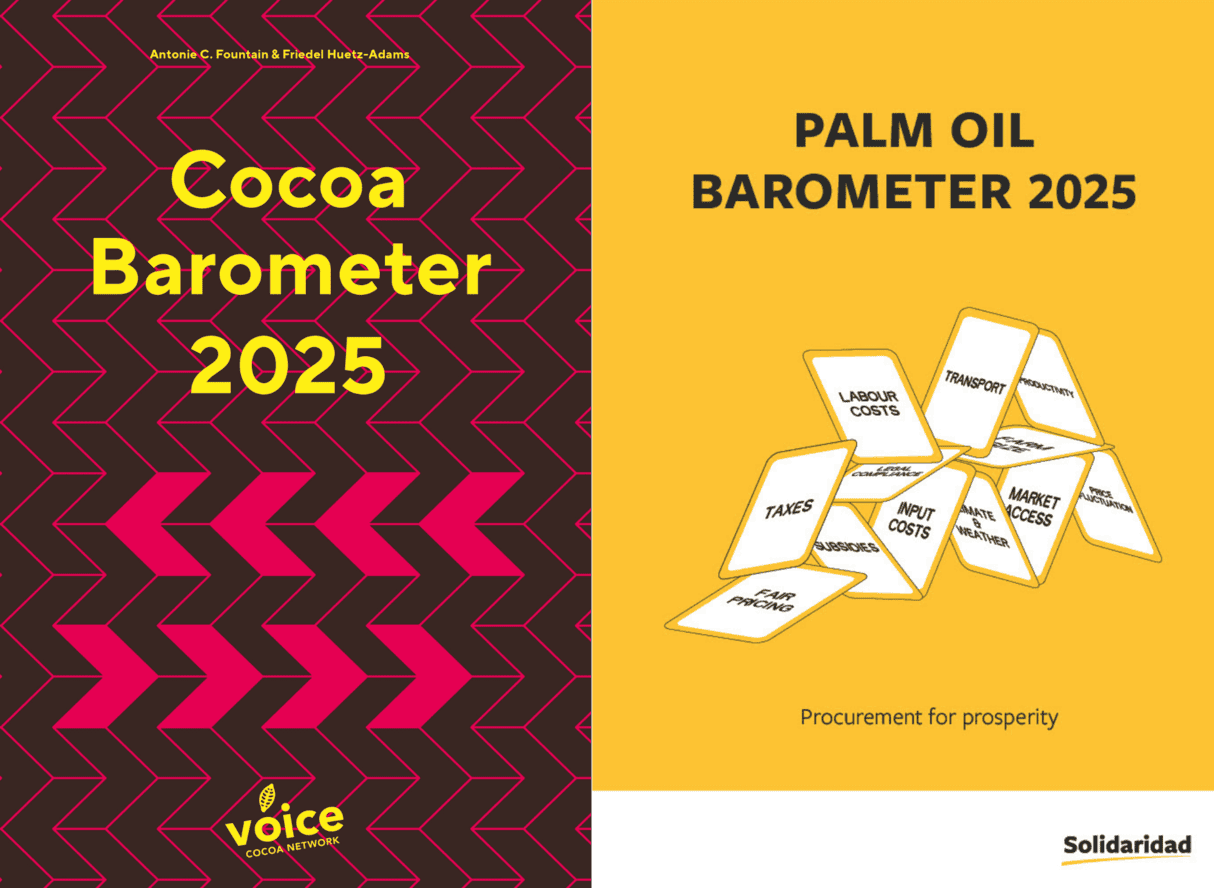
The 2025 Cocoa Barometer, the Palm Oil Barometer and the Cotton Rankings collectively reached hundreds of millions of readers and shifted media discourse toward smallholder inclusivity.
East and Central Africa's Managing Director received the Woman on Board Award and earned a nomination for the 2025 NGO Awards in the 'Best in Agriculture' category.
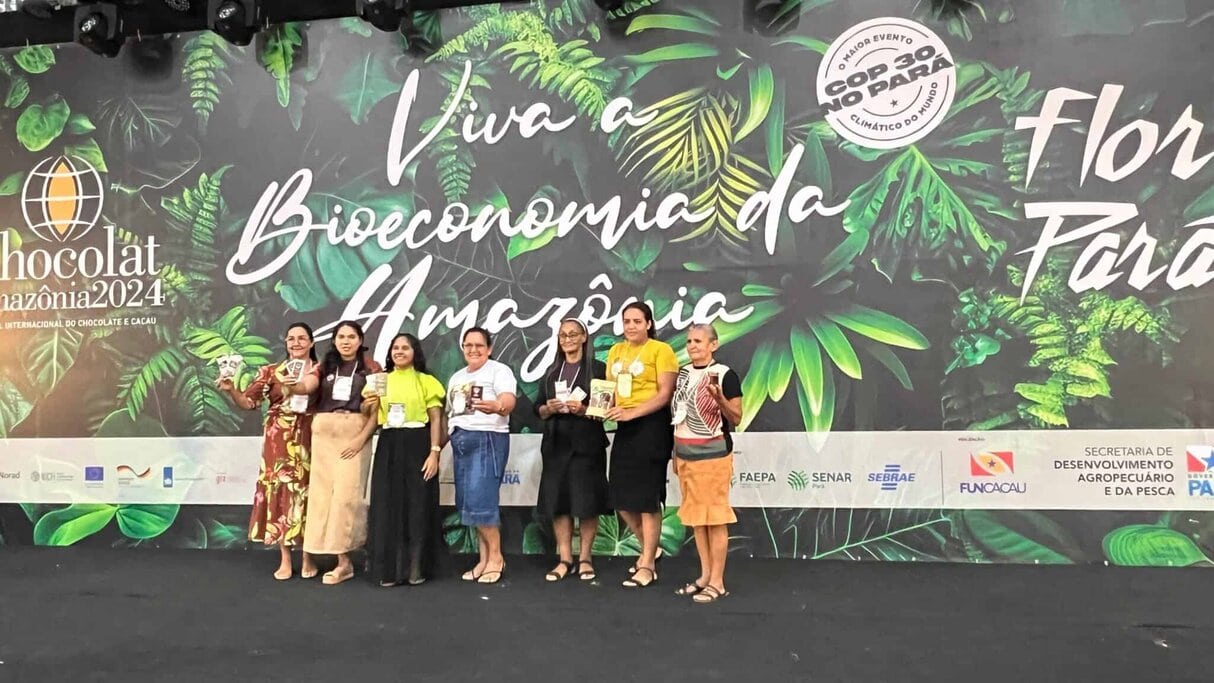
The cocoa beans from the Tuerê program in the Brazilian Amazon secured almost 40 national and international awards, including a silver medal at the Salon du Chocolat in Paris.
The Peruvian documentary film "Entre Polvo y Sueños" (Between Dust and Dreams), which chronicles the reality of female miners, won an Outstanding Excellence award at the DocuVision International Film Festival.
A multichannel campaign was developed to strengthen producers' feedback in a qualitative impact assessment of the Colombian oil palm supply chain. The study's online launch event became Solidaridad Latin America's most-watched video to date, with more than 98,000 views on YouTube.
We actively campaigned in and around COP30 in Brazil, highlighting a decade of climate-smart agriculture and forest restoration in the Brazilian Amazon.
Solidaridad attended, organized and featured in numerous high-profile international events, summits and conferences in 2025. We directly engaged thousands of stakeholders by speaking at major international forums, including the Africa ESG Summit, the RSPO conference in Kuala Lumpur, the Africa Food Systems Summit, Amsterdam Cocoa Week, and COP30.
Monitoring and Evaluations
Focusing on measuring what matters
In 2025, Solidaridad made a deliberate choice to become more impact-oriented. To measure our impact across all our programmes, we developed our 8 global Key Performance Indicators (KPIs) aligned with the new Multi-annual Strategic Plan (2026-2030). These KPIs follow a value framework approach, which allows us to move away from simply counting things towards measuring what matters. These globally agreed-upon KPIs align with the Sustainable Development Goals of the UN, and with globally recognized methodologies such as the Women Empowerment in Agriculture Index (WEAI) and the Agricultural Viability Index. They have been developed to work as indices, capturing different dimensions of change.
Advancing learning and digital intelligence
We continued internalizing learning within our project cycle, prioritizing sense-making and pause-and-reflect sessions with internal and external project stakeholders to strengthen adaptive management. This progress included developing a global learning product on Technical Assistance that documents both successes and challenges. We progressed in our move from data to intelligence, investing and refining our digital systems to improve data aggregation and analysis, now incorporating AI-driven data modelling and prediction. We also improved data visualization through global dashboards, enabling reliable, real-time tracking of results. This makes it easier to make fact-based management decisions.
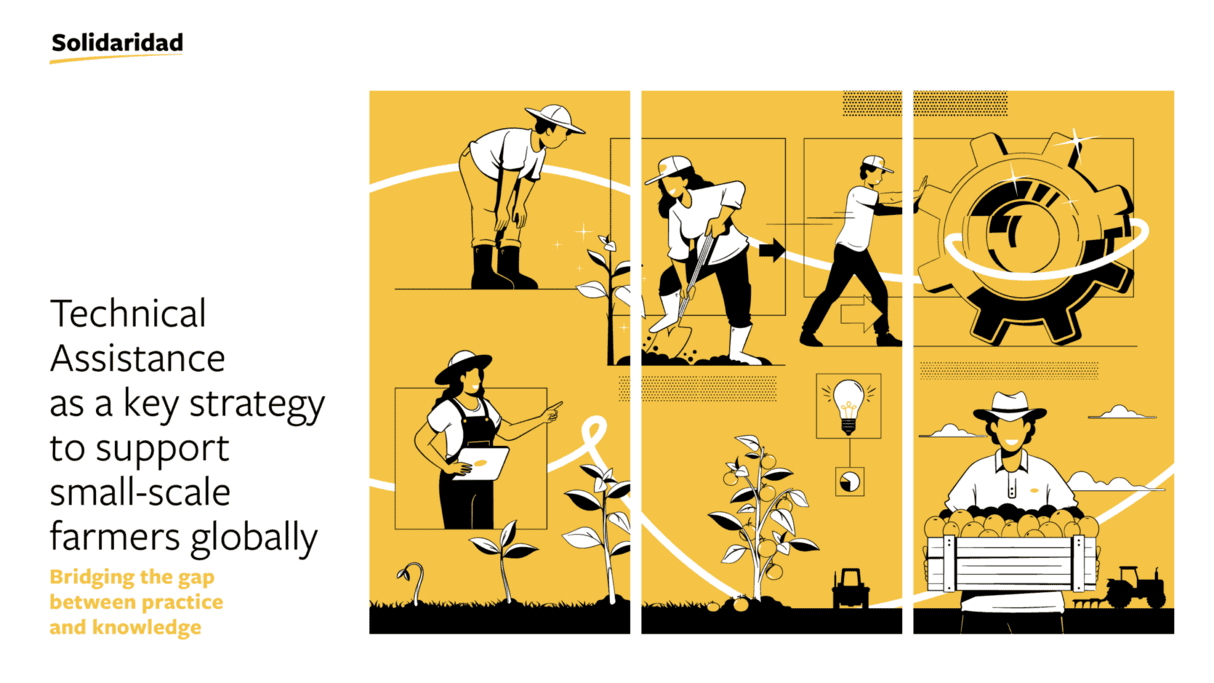
Solidaridad's learning product on technical assistance
Accountability and Evaluation
Over 50 evaluations were conducted globally, including baseline evaluations, mid-term and end-of-project evaluations — all pivotal, either in shaping or adapting project strategies, generating critical insights for adaptive management or in understanding impact. A key milestone was the completion of the end evaluation of our five-year RECLAIM! programme, which assessed the impact of our advocacy and policy-influencing strategy across all regions. A catalogue with case-studies and lessons learned of the RECLAIM! Programme can be found HERE.
FINANCEdd your title
Our income in 2025 was 69.6 million Euros. Let's dive a bit deeper into our financial results over 2025
Income over the years
Solidaridad secured 69.6 million euros in aggregated income from external sources in 2025. This was 350,000 euros above the secured budget, but 8.7 million euros lower than the 2024 income.
This is considered an overall positive result despite challenges in funding circumstances with changing donor priorities, the termination of USAID funding and the volatility of funding cycles.
|
EXPENSES 2025 |
|
2025 |
BUDGET |
|
2025 |
BUDGET |
2024 |
|
Aggregated direct expenditure for 2025 is 71.6 million euros, 2.6 million euros lower than the budget of 72.6 million euros and 9 million euros lower than the expenditure in 2024. The expenditure variances are mainly due to funding decreases, as expenditure is directly linked to the funding secured. |
||
INCOME PER CONTINENT
60% of the 2025 income (41.8 million euros) was secured through the Europe region. The Netherlands Ministry of Foreign Affairs remains our largest donor, contributing 43% to our income, predominantly through its programmes Reclaim Sustainability! and Pathways to Prosperity. Due to the termination of USAID funding, only 2 million euros (3%) of the 2025 income was secured through the North America region in 2025 compared to the 4.7 million euros (8%) in 2024.
INCOME PER SOURCE
The percentage of regional own fundraising decreased marginally from 38% in 2024 to 37% in 2025.
Income from Government Grants (€ 40.7 million) remains the main source of income, followed by income from companies (€ 14.3 million). Lottery income rose by 50% from € 2.9 million in 2024 to € 4.4 million in 2025 due to expanded Dutch and German Lottery programmes. Income diversification continues to be a high strategic priority in this period of changes in governmental funding priorities.
EXPENDITURE PER CONTINENT
Expenditure in the combined three regions in Africa was the highest, with € 22,6 million in 2025. This was slighly lower than the € 25,8 million in 2024. Latin America spent € 17 million in 2025 (2024 - € 19.8 million) and Asia spent € 16.2 million in 2025, versus € 16.6 in 2024.
EXPENDITURE PER TYPE
Staff costs in 2025 accounted to a total of € 27.8 million. We run all of our programmes and projects with our own staff, although in some major programs, partners are contributing to achieving our objectives in the field. Activity costs (€ 23.8 million) are all costs related to the execution of our programmes and projects in the field. Other costs (€ 6.2 million) include costs of a more operational nature related to running our offices.
SOME OF OUR PARTNERS AND DONORS
Our impressive outcomes and impact are the result of generous support from many governments, donors and companies around the world. Nearly half of our income comes from government grants, with the Dutch government being the largest contributor.
 Built with Shorthand